Among the sixty-four Incarnation Crosses in Human Design, four are called the Quarters of the Sphinx. They form the evolutionary backbone of the mandala, the an
Transforming the World Through the Quarter of Mutation
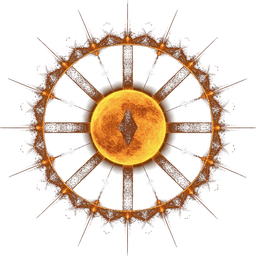
Among the sixty-four Incarnation Crosses in Human Design, four are called the Quarters of the Sphinx. They form the evolutionary backbone of the mandala, the ancient patterning by which life on this planet seeds, mutates, civilizes, and finally polarizes itself into conscious relationship. Each Cross carries one quarter of the whole cycle, and the one known as the Quarter of Mutation is the second in the sequence, the left-angle cross that has the specific job of breaking the old pattern so the new can take root.
The Theme: Mutation Through Withdrawal
The Quarter of Mutation is the Left Angle Cross of the Sphinx 2, built from the four gates 33, 19, 28, and 42. Its overarching purpose is the mutation of the gene pool. Where the first Quarter (the Quarter of Initiation) seeds the raw material of life, this second Quarter has the role of altering that material, withdrawing from what has been, listening deeply inside, and bringing forward something the species has never carried before.
In Human Design, mutation is not a violent event. It is a quiet act of listening. The personality sun in Gate 33, the Gate of Retreat, signals a life designed for privacy. The personality earth in Gate 19, the Gate of Wanting, gives the person an extraordinarily sensitive radar for what is healthy and what is not. The design sun and earth sit in Gates 28 and 42, the Game Player and Growth, framing the whole incarnation as a challenge that, when met correctly, leads to expansion rather than contraction.
The people who carry this Cross, whether fully or as part of their composite, are here to listen to a deeper directive. They are not here to enforce or to convince. They are here to withdraw from the noise of the collective long enough to hear what wants to emerge, then carry it back into the world in a form the world has not yet seen.
The Four Gates Working Together
Gate 33 is the spiritual gate of privacy and retreat. In the I Ching hexagrams, it speaks of the stag that turns back toward the mountain. The mutation cannot happen while the person remains exposed to the busyness of ordinary life. There must be a regular, almost sacred withdrawal, a turning away from the demands of the moment so that the body's intelligence can speak.
Gate 19 is the gate of wanting and approach. It is highly sensitive to its environment. For the Quarter of Mutation, this sensitivity is the very mechanism of evolution. The person senses when a particular form of life, relationship, or work has run its course. That sensing is not a failure or a rejection. It is the body saying, this is finished, and something else is now ready.
Gate 28 is the gate of the game player, or the challenge of the great something. It holds the central design sun and brings the willingness to test what has been heard. Mutation is never comfortable. The Cross must meet the resistance of the world, the resistance of the old pattern, and the resistance inside itself.
Gate 42 is the gate of growth, completion, and the increase. The mutation only matters if it grows. This is the gate that takes what has been transformed and expands it into the wider field, finishing cycles so that life itself becomes more abundant and more complete.
Why It Matters for the World
The Quarter of Mutation is sometimes mistaken for a Cross of withdrawal, even of escape. That is not its purpose. The mutation is in service of life, not in retreat from it. The person who carries this Cross is a bridge between the deeply private inner world and the collective that will eventually receive the new pattern.
When this Cross is lived correctly, the person becomes a kind of listening post for humanity. They register, often before anyone else, when a job, a relationship, a community, or a worldview has become a cage. By being willing to leave that cage, they free up the energy for the next thing to be born. Their personal mutations ripple outward. Friends, partners, children, and entire communities begin to feel the permission to also outgrow what no longer fits.
This is why the Quarter of Mutation is sometimes called the cross of the listener. It requires a deep trust in the body's inner authority. The mind will always offer reasons to stay, to comply, to keep the peace. The body, in its quiet way, will signal what is ready to change. Listening to that signal is the whole teaching of the Cross.
Living the Mutation
For those with this Cross in their incarnation, life is rarely about accumulation. It is about the continual release of the old so the new can be received. The temptation is to stay too long, to explain, to fix what was never meant to be fixed. The instruction is the opposite: listen, sense, withdraw, and trust that what is leaving is making room.
The world does not change through force. It changes when enough people are willing to outgrow the forms they were given. That is the work of the Quarter of Mutation, the quiet, persistent, deeply human act of becoming what has not yet been.