

The path to awakening is not romance. It is a rigorous process in which one is forced to face one's own shadows (Gate 38), pass through the limitations of the mind (Gate 17), let go of control over life (Gate 21), and ultimately find one's true self (Gate 10). Only then does true awakening come (Gate 51). There is a de…
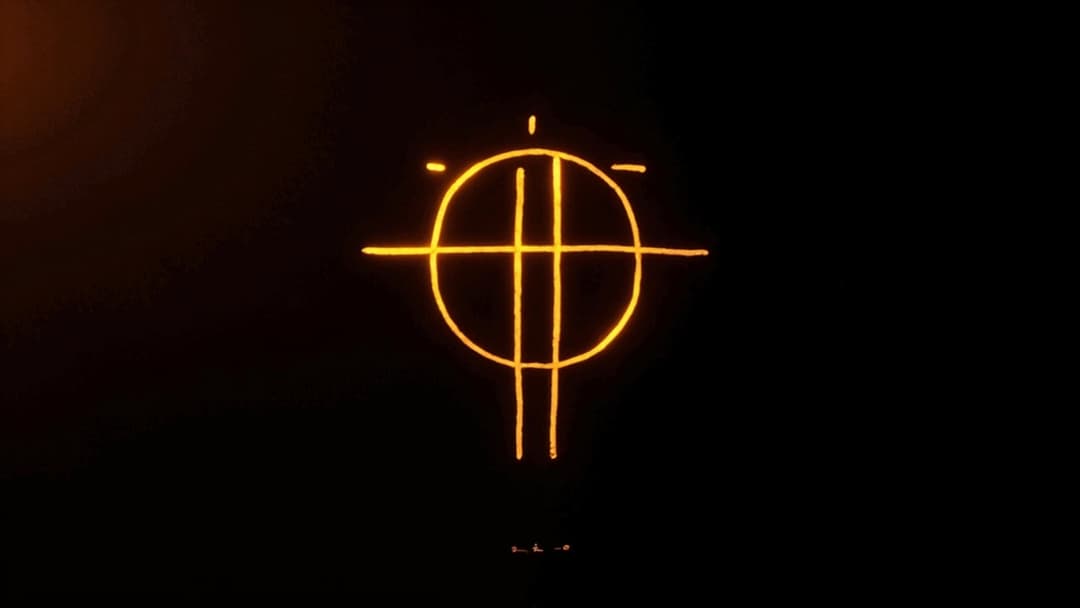
38
The Fighter
I Ching Hexagram: Opposition
Biology: adrenal glands
Gate 38 "The Fighter" in Human Design (I Ching hexagram Opposition). The fighter spirit that seeks individual purpose and meaning. Determination and stubbornness directed toward what truly matters.
Optimal Expression
The fighter spirit that seeks individual purpose and meaning. Determination and stubbornness directed toward what truly matters.
Shadow (misalignment)
Fighting without purpose. Stubbornness that becomes self-destructive. Exhaustion from battling everything and everyone.
Lesson
Channel your fighting spirit toward meaningful causes. Your determination is a gift when directed at finding individual purpose.
Affirmation
“I fight for what has meaning and purpose. My determination and persistence serve my individual path.”
Is this gate in your bodygraph?
Calculate your Human Design chart and discover which gates are activated in your unique bodygraph.
Calculate for freeThis gate belongs to the centerRoot Center →
Where this gate sits on the wheel
Related Channels
Related Blog Articles
The 6 Lines of this Gate
38.1Gate 38, Line 1 — Combat Researcher▼
♑ 09°30'00''–10°26'15''
The settlement of opposition based on circumstances.
▲ Exaltation · ♆ Neptune
The psychological attitude that guarantees proper action. The psychological gift of knowing when and how to fight.
▼ Detriment · ♂ Mars
A tendency to oppose as a general rule. A drive to fight as a general rule.
The Combat Researcher is driven by a deep, almost scholarly need to understand the anatomy of struggle itself. Where others rush to fight or flee, this energy pauses to ask: what is actually being threatened here, and why does this particular pressure provoke resistance? The investigation is not abstract — it is rooted in the lived experience of conflict, whether internal or external.
By studying the mechanics of opposition, the person with 38.1 begins to recognize that resistance is not always reactive or stubborn; it can be a doorway to discovering what one truly values. This foundational inquiry into the nature of fighting establishes the inner ground from which all conscious opposition can later emerge, and it keeps the struggle connected to the preservation of individuality rather than to ego or habit.
In its shadow, this line can become paralyzed in analysis, studying struggle so thoroughly that one never actually engages and turning opposition into a purely intellectual exercise. There is also a risk of projecting the need to fight onto others, researching their battles rather than recognizing one's own, or of confusing the study of resistance with the act of resistance itself.
In its gift, however, this energy brings rare depth and fairness to conflict. The 38.1 person often becomes the one who can see both sides, who can name what is really at stake beneath the surface argument, and who gives others permission to resist for the right reasons. Their understanding of individuality as something worth defending becomes contagious, and their willingness to keep asking "why do I fight?" protects them from fighting blindly.
The practical invitation here is to honor the research without getting lost in it. Notice what triggers your resistance, and instead of immediately acting on it, sit with the question: what part of me is being asked to yield, and what is it protecting? Let the study of struggle be thorough, but let it also inform action rather than replace it. When the inquiry feels complete — and the time to know will be sensed rather than calculated — bring what you have learned to the front line.
Conscious opposition is most powerful when it is grounded in a clear understanding of why you are fighting and what meaning of life you are defending.
38.2Gate 38, Lane 2 — Hermit of Struggle▼
♑ 10°26'15''–11°22'30''
Opposition that does not violate the normal code of behavior.
▲ Exaltation · ♇ Pluto
The value of discretion. The energy of intuitive awareness for discretion (prudence).
▼ Detriment · ☽ Moon
Excessive courtesy that is both servile and superficial, and defeats its own purpose. The energy for excessive courtesy during a fight.
This hermit of opposition carries a quiet, almost subterranean strength — a deep well of inner confidence that doesn't require external validation to sustain itself. Where others might be swayed by the pressure of the moment, the Line 2 of Gate 38 has already been through the storm in their inner chamber, sitting alone with the question until the answer becomes unmistakable. Their resistance is not a wall of stubbornness but a rooted knowing; they instinctively sense which battles are worth their life force and which are distractions to be released.
This makes them a fierce and discriminating guardian of what truly has value, able to stand steady in opposition long after louder voices have fallen silent.
Yet this same quality has a shadow. The hermit nature can tip into withdrawal as avoidance, where the inner knowing becomes a reason to disengage rather than to act with precision. There is a risk of becoming so self-contained that the values they defend never reach the world that needs them, or of mistaking solitary certainty for a license to dismiss those who haven't walked the same inward path.
At its extreme, the pressure they were built to resist becomes a kind of identity in itself — opposition for its own sake, defended even when the cause no longer deserves it.
The practical gift here is discernment married to endurance. In lived terms, this means learning to tell the difference between retreat that is wisdom and retreat that is fear, building in regular periods of true solitude to renew the inner compass, and then choosing with care the moments when stepping forward serves the larger value. Trust the inner weighing process — it will tell you, with remarkable accuracy, which fights are truly yours to take on and which are meant to be left to dissolve on their own.
38.3Gate 38, Line 3 — Martyr of Struggle▼
♑ 11°22'30''–12°18'45''
Analysis that reinforces resistance (counteraction, opposition).
▲ Exaltation · ☉ Sun
The ability to endure through integration with similar forces, thereby ensuring the vitality to continue. The energy to unite with others during a fight.
▼ Detriment · ⊕ Earth
A selfish union that depletes the energy of partners to ensure personal vitality. The energy to selfishly use others during a fight.
The Martyr of Struggle in Gate 38 is forged in the heat of confrontations that often feel necessary in the moment but later reveal themselves as wasted energy. This is the line that must walk into the arena repeatedly, not because every fight is meant to be won, but because the body and spirit need direct experience to calibrate what is worth opposing and what is simply noise. The "martyr" here is not a victim but a willing combatant who offers themselves up to struggle after struggle, accepting bruises as tuition.
Over time, the accumulation of these battles builds a very specific kind of knowing, an instinctive radar that separates principled opposition from ego-driven friction. The pain is real, but it is never pointless; it is the curriculum.
In its shadow, this energy can become bitter, perpetually combative, and addicted to the drama of conflict. A person living in the unintegrated Martyr of Struggle may find themselves picking fights to feel alive, mistaking stubbornness for strength, or retreating into cynicism after so many futile encounters. They may begin to identify with struggle itself, equating their worth with their ability to endure or oppose.
The gift, however, is a refined warrior who fights only when the battle truly matters and walks away from the rest with dignity intact. Their discernment becomes valuable to others; they can sense when a confrontation is worth the cost and when it is just a drain on vital force.
Practically speaking, this line benefits from pausing before engaging, asking whether the opposition serves something real or is simply the pull of an old pattern. Journaling after conflicts, or even a brief reflection on what was learned, helps transform raw struggle into wisdom rather than scar tissue. Surrounding oneself with people who value peace as much as purpose also softens the edges of this fierce energy.
The matured Martyr of Struggle becomes a quiet force who knows exactly when to raise the sword and when to sheath it, and that restraint is what truly makes them formidable.
38.4Gate 38, Line 4 — Struggle Opportunist▼
♑ 12°18'45''–13°15'00''
The stage in opposition where one is totally isolated.
▲ Exaltation · ♇ Pluto
Ambition and concentration in order to endure. The energy to fight persistently alone.
▼ Detriment · ♂ Mars
Alienation experienced as painful confinement, which deprives one of seeing that at some point someone appears who can come to help. The energy for persistence is so strong that it is difficult to acknowledge the existence of others who can help during a fight.
The fixed line in the Quarter of Mutation gives Gate 38 a particular kind of reach. While other lines of the Fighter might struggle alone or in isolated opposition, the Line 4 has a gift for assembling a room, a movement, a coalition. They don't just fight for a cause; they identify who else is fighting for that cause and draw them together. The opportunist nature here is not about exploitation but about recognizing the right moments to unite people who share a common vision.
When injustice or misalignment calls for opposition, this person is the one who can look across a crowd and see the other warriors, connecting them into something far more powerful than any individual effort could achieve on its own. The struggle for meaning becomes not just personal but collective, amplified through the network of like-minded souls they have cultivated.
The shadow of this line can appear as manipulation or as a tendency to use others as instruments for the struggle. When the networking instinct becomes more about personal gain, ego-driven battles, or maintaining a sense of belonging through constant conflict, the same skill that unites people can fracture them just as easily. There is also the risk of mistaking momentum for meaning, of gathering people quickly around a half-formed purpose and then discovering the coalition lacks substance.
The mature expression requires clarity about what is actually being fought for, so that the people who come together are drawn by a real shared truth rather than by the heat of conflict itself. Without that groundedness, the Line 4 risks building alliances that collapse the moment the adrenaline fades.
Practically, this person thrives when they invest in their network during quieter seasons, long before the struggle demands action. The relationships nurtured in ordinary moments become the coalitions they can summon when opposition is needed. The gift is simple and profound: justice and meaning rarely win alone, and this energy is wired to know that truth in the bones, to find the right people, and to bring them together at precisely the right time.
The work is to keep refining what that "right time" and "right cause" actually are, so the opportunist becomes not just a gatherer of forces but a true steward of the fight.
38.5Gate 38, Lane 5 — Heretic of Struggle▼
♑ 13°15'00''–14°11'15''
Opposition without basis.
▲ Exaltation · ♄ Saturn
A possible crystallization (embodiment into a definite form) that clarifies the misunderstanding. The energy that attracts misunderstanding, and the persistence to face opposition.
▼ Detriment · ♇ Pluto
Recognition that misunderstanding is the root of opposition, yet the persistence that it is the opposition forces who misunderstand. Here, misunderstanding is at the root of the fight, and the energy of stubbornness to insist upon and maintain one's own position.
The heretic of struggle carries a restless, questioning spirit that refuses to accept the inherited rules of conflict. Where others see opposition as something to endure, resist, or simply defeat, the Gate 38 Line 5 person treats every clash as raw material to be reshaped. Their gift is the ability to step outside the established ways of fighting and to ask the subversive question: what if the struggle itself is the door, not the wall?
This often looks strange to those around them, because they seem to welcome friction rather than flee from it. In practice, this means they are drawn to situations where the conventional approach has failed, and their hands-on, experimental nature lets them pioneer methods that more orthodox fighters would never consider.
Yet the shadow of this heretical energy is real. The same non-standard approach that produces breakthrough change can also be mistaken for provocation, for a kind of combative showmanship, or for someone who manufactures conflict where none was needed. Others may feel pushed, tested, or destabilized by their willingness to sit in opposition and to turn it into something useful.
The Line 5 has a role-model quality, but it is projected outward through a sort of righteous challenge, and not everyone is ready to be challenged. When this energy is unconscious, the person may become a perpetual dissenter, fighting for the sake of fighting, or they may feel crushed by the weight of being the one who always has to prove that struggle can be creative. The inner work here is to recognize that their heretical fire serves life best when it is aimed at genuine opposition, not at the comfort of the tribe.
Practically, the heretic of struggle thrives when they allow themselves to be wrong about the form the fight should take, trusting the pulse of conflict rather than pre-planning the outcome. They benefit from finding communities, causes, or projects where experimentation with conflict is welcomed, because their most useful contributions emerge when they are given space to test unconventional approaches without having to justify the process in advance.
The takeaway is to treat opposition as a creative partner rather than an enemy, and to use the heretical instinct to transform friction into forward motion for the whole group, rather than carrying the weight of struggle alone.
38.6Gate 38, Line 6 — Battle Role Model▼
♑ 14°11'15''–15°07'30''
The settlement of opposition based on circumstances.
▲ Exaltation · ♄ Saturn
▼ Detriment · ⊕ Earth
The Line 6 role model of Gate 38 stands as living proof that the warrior's path is not about winning battles, but about refining what is worth fighting for. Through years of confrontation and opposition, this person has learned to distinguish between the heat of conflict and the deeper purpose it serves. Their experience of numerous confrontations has matured into a deep wisdom of choice - the ability to feel, before entering any struggle, whether it is one that protects genuine meaning or merely feeds the ego.
This is not someone who has stopped fighting, but someone who has learned to fight with precision, directing energy only toward causes that uphold values worth defending.
The shadow of the 38-6 can appear as someone who has hardened into righteousness, carrying old grievances as credentials of wisdom, or who has become so identified with past battles that they cannot recognize when a new conflict is not theirs to enter. There is a real risk of becoming the fighter who is always fighting, using opposition as identity rather than as a conscious tool.
The mature role model has metabolized these tendencies and now embodies a different kind of presence - one that radiates what they stand for rather than what they stand against. Their authority is not built from being the loudest in the room, but from the quiet certainty that comes from having been through the fire many times.
Practically, this energy is a living guidepost for knowing when opposition serves life and when it merely serves the self. The 38-6 role model teaches by example that the real warrior does not fight against someone, but for something significant - that every true struggle is aimed at protecting meaning and values that outlive any single confrontation. In moments of conflict, this frequency invites you to pause and ask whether you are fighting for something meaningful, or whether fighting has simply become a familiar place to stand.
Their lives are a demonstration that the deepest warrior energy is protective rather than reactive, and that the highest battles are those fought on behalf of something greater than the self.
From our corpus
Measured across 13,930 real charts36.46%This gate is active in 36.46% of charts
#4 most common of 64
How we measured this →What it travels with
Gate company is astronomy, not design mechanics. Measured across 13,827 real charts.
39in 58% of charts with this gate · ×1.68
opposite on the mandala: the Sun and Earth are always opposed, and so are the Nodes
21in 42.4% of charts with this gate · ×1.34
the design arc: the design Sun sits 88° before the personality Sun, which is exactly 15–16 gates
54in 40.8% of charts with this gate · ×1.29
the neighbouring cell: Mercury and Venus never stray far from the Sun
Every other distance on the mandala produces nothing — the lift hovers around one. Only the corpus shows this.
Contribution to chart rarity1.5 bits
Voice of the Sources5 sources
Consensus
Gate 38 is the energy of the Wrestler, which lives in the Root Center and manifests as individual opposition, resistance, and defiance of the system or authority. The authors agree that this energy is polar in nature, fueled by adrenaline and seeking to maintain integrity under pressure. The main test of the bearer is to distinguish a real struggle from an artificial one and not to turn resistance into an end in itself.
- Ra Uru HuEmbeds the 38th gate in a logical process and polar pairs with the 52nd as the only fuel that challenges authority to maintain individual integrity.
- Ilse SendlerSees the 38th Gate mainly through the prism of relationships, where entering through them makes the partnership a battleground side by side or a test of the true nature of the partner.
- Lynda BunnellDescribes the inner drama of the gate through the lines of a six-step process — from the false belief in the guilt of others to the full expression of individual will.
- CurryFocuses on the practice of peaceful application of this warrior energy through meditation and daily good deeds, transforming resistance into a conscious contribution to peace.
- Chetan ParkynEmphasizes the risk of self-destruction - when the struggle becomes an end in itself and pushes the bearer into isolation, and also highlights the test of distinguishing between real and imagined conflicts.
Where sources diverge
Difference in focus: Sandler and Bunnell view the gate through relationships and the internal drama of the lines, Curry through a peaceful meditative practice, while Parkin and Ra Uru Hu talk more about systemic resistance and the dangers of turning struggle into an end in itself.
From primary sources3
The essence of Gate 38 lies in the confrontation of the inner warrior of light against the dark forces of man's lower nature. It is this internal struggle that is behind any external conflict, so stability becomes a key feature of the bearer of this energy flow - instinctive patterns are deeply rooted in the character…
There is an important nuance here: the full cycle of Pluto is more than 250 years, so most people experience only part of its path and mistakenly believe that this planet does not affect them. In fact, there is an impact, and it is very noticeable. Since 2010, Pluto has entered Gate 58 in the Root Center, a pressure c…
Related articles
All articles: Gates →Right Angle Cross of Tension — Gate 38 (The Fighter)The Right Angle Cross of Tension, with the Conscious Sun in Gate 38, is a personal-destiny Incarnation Cross dedicated to the fight against injustice, the demanLeft Angle Cross of Tension — The Fighter (Gate 38)The Left Angle Cross of Tension anchored at Gate 38 is a configuration of opposition and purposeful struggle. Its life theme centers on the discovery, through rThe Left Angle Cross of Individualism — Gate 38, The FighterThe Left Angle Cross of Individualism is anchored by the Conscious Sun in Gate 38 and takes its name directly from the Channel of Individualism (38–39) that defThe Transit of Gate 38: When The Fighter Steps Into the RoomThe Sun's passage through Gate 38 — The Fighter — activates one of the most charged, principle-driven forces in the BodyGraph. Whether you have this gate defineGate 38 Line 1: The Investigative WarriorGate 38 is The Fighter — the hexagram of opposition, of standing in one's individual purpose against resistance. The 38th hexagram of the I Ching (睽, Kuí) carriGate 38 Line 6: The Veteran Warrior — The Role Model of OppositionGate 38 is the hexagram of righteous opposition — the individual who fights for what is theirs, not out of aggression but out of fidelity to purpose. The sixth