

In Human Design, there are many intersections with various traditions—from the academic to the esoteric—but the very aspects of this synthesis often remain unexplored. A good example is the Hindu chakra system, which resonates with the seven-year cycle of deconditioning. The first chakra corresponds to the Root Center…
50
Values
I Ching Hexagram: The Cauldron
Biology: spleen and the lymphatic system
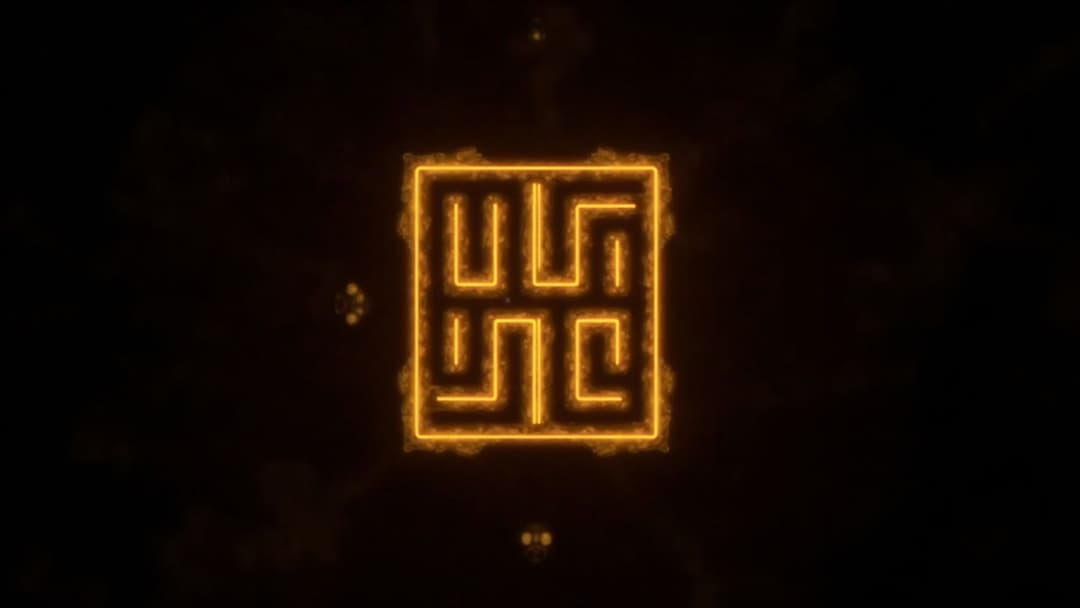
Gate 50 "Values" in Human Design (I Ching hexagram The Cauldron). Instinctive awareness of values and laws that sustain community. The responsibility to nurture and protect the wellbeing of all.
Optimal Expression
Instinctive awareness of values and laws that sustain community. The responsibility to nurture and protect the wellbeing of all.
Shadow (misalignment)
Rigid adherence to rules without flexibility. Taking on too much responsibility for others. Burnout from caretaking.
Lesson
Uphold values and principles that serve the wellbeing of all. Your instinctive care creates a foundation for future generations.
Affirmation
“I uphold values that serve the greater good. My instinctive sense of right and wrong creates a safe foundation.”
Is this gate in your bodygraph?
Calculate your Human Design chart and discover which gates are activated in your unique bodygraph.
Calculate for freeThis gate belongs to the centerSpleen Center →
Related Channels
Related Blog Articles
The 6 Lines of this Gate
50.1Gate 50, Line 1 - Researcher▼
♎ 26°22'30''–27°18'45''
▲ Exaltation · ♂ Mars
The desire to be effective and successful, which utilizes the most fundamental forces, while purifying its nature (character). Awareness that the growth and purification (refinement) of values will benefit destiny.
▼ Detriment · ♀ Venus
Dissatisfaction or embarrassment about origin, leading to an obsessive idea of good breeding (refinement). Dissatisfaction with primary values, which requires purification.
Gate 50, Line 1 carries the energy of someone who treats values and laws as a living field of study rather than a fixed inheritance. Where the Gate of Values is concerned with what a community holds sacred, the Line 1 researcher insists on understanding why a particular rule exists, where it came from, and whether it still serves real human needs. This is not a person who accepts the prevailing moral code on faith; they quietly investigate, compare, and weigh different systems of value against one another, searching for those that genuinely nurture people rather than simply control them.
Their commitment is to the common good, but they reach that commitment through disciplined study, not through loyalty to tradition for its own sake.
The gift of this placement is a rare kind of moral seriousness. When a Gate 50, Line 1 person commits to a set of values, it has been tested. They can articulate not only what they believe but why, having walked the path of inquiry that gives their convictions real weight. In communities, families, or organizations, they become the ones who can see when a rule has outlived its purpose, or when a new need is being ignored because no existing law addresses it.
They are particularly skilled at translating between different value systems, helping people see where their principles overlap and where they quietly conflict. However, the shadow lives in the same investigative drive: an endless search for the "best" framework can become a way to avoid commitment, and the research itself can become more comfortable than the act of living by what has been found.
There is also a risk of becoming a perpetual critic of the values others hold, mistaking the act of questioning for the act of caring.
Practically, this line benefits from giving their research a container, a defined question, a project, a body of work, rather than leaving it open-ended. Studying values in dialogue, through reading, or by exploring how different cultures have organized care and law, helps them turn curiosity into grounded insight. The mature expression of this energy arrives when the researcher accepts that no value system is perfect, and chooses the one they will stand behind, flaws and all, because it serves the people they are here to care for.
Their ultimate contribution is not the discovery of a flawless law, but the wisdom to know which imperfect laws are still worth defending, and which have quietly stopped loving the community they were made to protect.
50.2Gate 50, Line 2 - The Hermit▼
♎ 27°18'45''–28°15'00''
▲ Exaltation · ☉ Sun
The power (determination) of intention, which can enjoy overcoming misfortunes (calamities) in order to achieve its goal. The power drawn from upholding one's values in the face of opposition or conditioning.
▼ Detriment · ♀ Venus
Discomfort due to affliction, which can lead to deliberate withdrawal. Lack of power, where values are threatened by opposition or conditioning.
Gate 50, Line 2 carries the weight of values that are tested and refined in solitude. This is not the casual aloneness of the introvert recharging, but a deliberate, almost sacred withdrawal where the soul examines what it stands for. When this energy is mature, the individual becomes a quiet guardian of a clear moral compass, having stripped away inherited beliefs and replaced them with principles that are truly their own.
The responsibility to maintain order and protect the weak flows not from external rules but from an internal code forged through long, often lonely hours of reflection. The Hermit here knows that without regular retreat from the noise of collective opinion, the fire of authentic values dims and is replaced by borrowed convictions.
The shadow of this configuration reveals itself when solitude hardens into isolation, and principle calcifies into rigidity. The same determination that once refined truth can become a fortress of self-righteousness, where the individual stands so firmly by their convictions that they forget the humanity of those who have not yet seen what they have seen. There is a quiet arrogance that can creep in, a sense that only those who share the same values deserve protection or order, leaving others outside the circle of care.
The Hermit must guard against using values as a wall rather than a foundation, and remember that the wisdom gained in solitude is meant to serve, not to separate. The gift, when fully embodied, is integrity that does not need an audience — a person whose presence alone raises the standard around them simply by holding their ground.
In practical terms, this Line asks for permission to disappear inward without apology. It thrives on regular, unstructured time alone — not to escape, but to listen — and it functions best when the individual honors the rhythm of this need rather than forcing themselves into constant social engagement before their values are clear. The practical takeaway is to build solitude into the architecture of life as a non-negotiable, to let values be tested privately before defending them publicly, and to recognize that protecting the weak is most powerful when it is done with quiet consistency rather than grand declarations.
When the Hermit of Line 2 trusts the silence, they return to the world carrying a standard that cannot be easily shaken.
50.3Gate 50, Line 3 - Martyr▼
♎ 28°15'00''–29°11'15''
▲ Exaltation · ☽ Moon
This is the Moon in exaltation, therefore, when a person is unable to do things alone, they naturally attach themselves to forces that care for and protect them. The understanding that the support of others is necessary to maintain one's principles and values.
▼ Detriment · ☿ Mercury
The resentment of a person whose natural mental gift is ignored, forcing them to seek patronage (curry favor with someone) in order to survive. Discomfort from the realization that a person cannot remain alone with their principles.
When a person carries Gate 50, Line 3, their relationship to values is forged not in theory but in the fire of lived experience. They feel the sting of misalignment acutely — when the standards upheld by their family, workplace, or culture diverge from what they know to be true and right, something in them aches. This is not a casual discomfort but a deep, almost cellular recognition that something is off.
The pain is the signal, the compass pointing toward what truly matters, and the Line 3 nature means they are meant to feel it fully rather than bypass it. They discover what they stand for precisely by discovering what they cannot stand for.
The shadow of this configuration is the willingness, even an unconscious pull, toward suffering as proof of commitment. The Line 3 martyr may take on more sacrifice than is genuinely required, treating personal depletion as a badge of devotion to a cause. They can become attached to their wounds, gathering stories of how the world has failed their values, and in doing so lose sight of their own agency.
Yet the gift is the embodied wisdom that only comes through this trial-and-error process. They are not handed values as abstract ideas passed down from above; they earn them through cycles of trying, failing, adapting, and trying again. Each disappointment refines the inner standard, and each adaptation teaches them how to hold their truth without rigidity.
Practical living with this energy requires honoring the pain as information rather than identity. When social values clash with personal truth, the response is not to absorb the suffering silently nor collapse into resentment, but to ask what the ache is pointing toward. Adaptability here is not about compromising what matters, but about finding the creative, flexible way to preserve the essential while navigating the imperfect realities of the world.
A useful practice: notice when you are sacrificing from genuine love versus from a quiet belief that your value is only proven through what you endure, and choose the former whenever you can.
50.4Gate 50, Line 4 - Opportunist▼
♎ 29°11'15''–30°07'30''
Lack of enriching values.
▲ Exaltation · ♄ Saturn
A baneful (criminal) gift for transforming lower values into material success. This difficult position is given by the exaltation of Saturn, which limits a person's actions more through selfishness and questionable reputation than through criminality. The ability to sustain one's power despite lower values.
▼ Detriment · ♂ Mars
With such energy and an absence of traditional values, the worst can be expected. A potential disregard for values, which may lead to corruption or the destruction of the protective system.
The Line 4 of Gate 50 carries an unusual and intimate relationship with the value systems that surround them. They do not simply live under the law - they study it, sense it, and map its openings with an almost instinctual precision. This gives them a natural fluency in navigating rules, contracts, codes of conduct, and moral frameworks, not necessarily to escape them but to understand where flexibility lives.
In their higher expression, this makes them exceptional advocates, mediators, and reformers who can spot when a system has become rigid, outdated, or unjust, and who can find legitimate pathways to shift it toward greater fairness.
In the shadow, however, this same acuity turns inward. The eye that can find a loophole to correct an imbalance can just as easily find one to exploit it. They can become the figure who defends fair laws in public while quietly bending them in private, rationalizing personal gain as deserved or reasonable. Because they understand the value system so thoroughly, they can also hide within it, sometimes even convincing themselves that what serves them ultimately serves the collective.
This is the recurring test of the line: their strategic mind moves faster than their moral compass if that compass is not deliberately tended.
The practical work for this combination is to pause before each strategic move and ask who the opportunity truly serves. The openings they perceive are real and often time-sensitive, but they benefit from a moment of orientation toward the wider community before acting. When aligned, they are rare and valuable - a guardian of values who uses opportunistic intelligence to protect what matters, to defend the vulnerable within unjust systems, and to channel resources toward collective wellbeing.
They thrive best when embedded in trusted circles of mutual accountability, where their strategic acumen is harnessed for the good of the whole rather than used to position themselves above it.
50.5Gate 50, Line 5 - Heretic▼
♏ 00°07'30''–01°03'45''
When continuity brings success, it should not be interfered with.
▲ Exaltation · ♄ Saturn
Disciplined and natural conservatism in order to avoid unnecessary change. A conservative awareness that the fundamental principles should not be carelessly abandoned (neglected).
▼ Detriment · ♂ Mars
A perverted reaction to rebel (revolt) against the methodology of one's own success. When effectively stimulated, the urge to rebel against fundamental principles.
Gate 50, Line 5 carries a frequency that feels like a quiet but persistent disturbance in the collective field. Wherever this line appears in a chart, the person is wired to sense when the values, laws, or moral codes a society clings to have become hollow or harmful. In lived experience, this looks like an internal pressure that builds until something outdated is finally named.
A law, a tradition, a workplace rule, a family expectation — the Heretic sees where the old structure contradicts the present reality and feels compelled to speak. This is not rebellion for its own sake; it is the discomfort of watching people suffer inside systems that no longer protect them.
The gift and the shadow live very close together here. The gift is prophetic vision — the ability to hold a future value clearly while the collective is still attached to the old one. The shadow is being ahead of the room, which can look like arrogance, self-righteousness, or simply being unwelcome. Heretics are often dismissed as too radical in their lifetime and honored as visionaries after they are gone, and that delay between speaking and being heard is the real test of this line.
The energy can harden into bitterness, martyrdom, or a kind of moral superiority if the person is not grounded in their own worth. Practically, this line does best when it stops trying to convince others immediately and instead trusts that its role is to plant the seed, repeat the truth patiently, and let time prove it.
A practical way to live this energy well is to choose the arenas where reform is actually welcome, and to release the ones that are not yet ready. Speak the new value clearly, without needing the crowd to clap in the moment. Build small communities of people who can hold the vision with you so the frustration of being misunderstood does not curdle. And remember that the Heretic's authority is not popularity but accuracy — when the old value finally collapses, the people who saw it coming will be trusted. Your work is to stay loyal to what is true rather than to being right in real time.
50.6Gate 50, Line 6 - Role model▼
♏ 01°03'45''–02°00'00''
▲ Exaltation · ♀ Venus
The gift, in a position of power, of maintaining harmony even within strictness. The determination to vigorously uphold one's values and to continue having harmonious relationships with others.
▼ Detriment · ☽ Moon
An inherent capriciousness which, in a position of authority, may occasionally repel or offend (insult) and affect overall efficiency. The determination to uphold one's own values, but at the expense of harmonious relationships.
Gate 50, Line 6 carries the archetype of the elder guardian of values, the one who has cycled through enough of life to understand that values are not philosophies to be debated but living currents that must be expressed through behavior, presence, and the way one treats the people in front of them. She does not preach integrity, she radiates it. Her body, her words, her choices, and her boundaries all carry the same frequency, and over time people simply feel safer in her presence because the standards she holds are visible, embodied, and unwavering.
This is the role of the well in the village — not the loudest voice, but the one the village trusts to draw water from when they are thirsty.
The shadow of this line is the weight of being watched. When your life is your teaching, every inconsistency becomes a public failure, and the Line 6 often feels the heaviness of high expectations, sometimes imposed by others, sometimes internalized as a relentless self-judgment. She can become rigid, performative, or quietly exhausted by the responsibility of always having to be the example, and at worst she can fall into moral superiority or disappointment when those around her do not rise to the same standards.
The gift is that her consistent embodiment of her values becomes a quiet force that elevates the whole field around her; people do not need her to tell them what to do, they simply reorganize themselves toward what she naturally models.
Practically, this means her work is less about instructing and more about refining herself. The most powerful thing she can do is keep her own well clean — to tend her own values, to act in alignment with what she says matters, and to let that coherence do the teaching. When she stops performing the role of role model and simply lives her values through daily decisions, she becomes a kind of embodied law, and others orient to her not because she demands it, but because her presence makes integrity feel possible again. Her responsibility is to the well itself, not to whether others drink from it.
From our corpus
Measured across 13,793 real charts34.31%This gate is active in 34.31% of charts
#13 most common of 64
How we measured this →What it travels with
Gate company is astronomy, not design mechanics. Measured across 13,827 real charts.
3in 41.9% of charts with this gate · ×1.59
opposite on the mandala: the Sun and Earth are always opposed, and so are the Nodes
9in 41.6% of charts with this gate · ×1.27
no consistent cause in planetary motion
28in 42.4% of charts with this gate · ×1.25
the neighbouring cell: Mercury and Venus never stray far from the Sun
Every other distance on the mandala produces nothing — the lift hovers around one. Only the corpus shows this.
Contribution to chart rarity1.6 bits
Voice of the Sources4 sources
Consensus
Gate 50 (Cauldron) is the energy of values and care that nourishes family and community, providing collective norms and laws through deep instinct and sacred responsibility. For their full manifestation, the Sacral and the internal Authority are necessary, otherwise the concern is exhausting and turns into suffocating control.
- Ra Uru HuSees the 50th gate as the root part of condemnation, where the three streams of the spleen (Taste, Intuition, Instinct) converge and form the Confluence of Values.
- Lynda BunnellBreaks down Gate 50 by Threads and Cutaway Themes: laws of survival, leniency, and the utopian reinvention of values through the Desire 2 line.
- CurryEmphasizes the empirical sacrifice of the bearer who instinctively feeds loved ones and the role of sacred energy as a limiter so that care does not become controlling and exhausts the person.
- Chetan ParkynPresents the Gate as a filter of inherited values, sifting from the generations what endures time, and advises to trust Authority against the fear of inconsistency.
Where sources diverge
Divergent in focus: Ra Uru Hu and Linda Bunnell emphasize the cosmogenesis and structuring role of the Gates in flows and channels, while Curry and Chetan Parkin focus on the medium's practice of self-care, Authority, and the inner fear of exhaustion.
From primary sources3
Although Gate 50 - the Gate of Values - may seem communicatively demanding, its bearers are able to establish harmony in a team even without conscious effort. The power of this archetype is in the high-frequency aura that works as a genetic code for social balance. Maintaining such a balance requires taking into acco…
In Human Design, Gate 50 forms a codon group with Gate 3, and it is through this pair that the idea of heterarchy is revealed—a community based not on hierarchy or external control, but on the freedom of each member. The Gift of Gate 3 — Innovation — carries the energy of joy and creative freedom. It begins at the c…
Related articles
All articles: Gates →Gate 50 Line 5: The Universalization of Values — The Projected CauldronThe 5th line is the Herald and the Projectionist. In the I Ching tradition it is the top yang line of the upper trigram, the place where inner work becomes a beLeft Angle Cross of Desire — Gate 50The Left Angle Cross of Desire is built on the polarity of Gate 50 — Values and its opposite, Gate 27 — Caring/Nourishment. This is a cross concerned with the pGate 50 in Human Design: The Gate of ValuesGate 50 is the keeper of tribal values. Learn how this Spleen force shapes laws and responsibility.Right Angle Cross of Laws (Gate 50)The Right Angle Cross of Laws is a tribal cross built on the four fixed gates 50, 27, 60, and 56. It belongs to the Quarter of the Sleeping Phoenix, and its oveChiron in Gate 50: The Wounded Healer of Values and EquilibriumChiron in Gate 50 (Equilibrium): the wound, healing path, and wisdom. How your deepest wound becomes your strength.Gate 50, Line 3: The Transforming HandlesGate 50, Line 3: The Transforming Handles
Keynote
Trial-and-error in the carrying of values. Where the hexagram as a whole describes the Cauldron of preserva