

The Ajna center, where conscious thinking resides, is a kind of chariot without which existence in the flesh is impossible. Those who touched on the higher visions, more than once described images of chariots with wheels within wheels - this symbol runs both through Revelation and through the cabalistic concept of the…
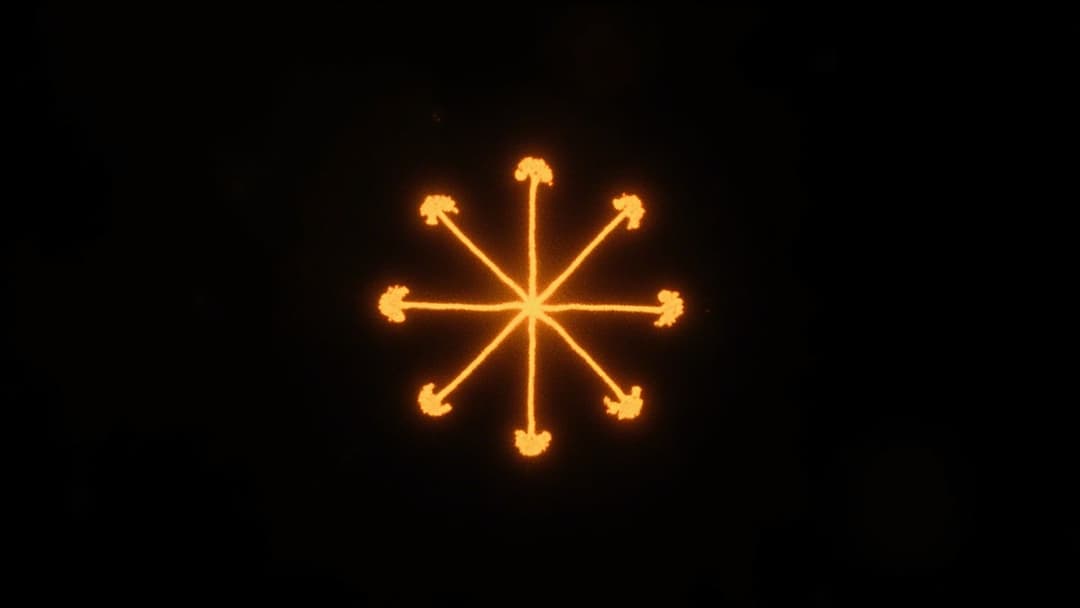
60
Acceptance
I Ching Hexagram: Limitation
Biology: adrenal glands
Gate 60 "Acceptance" in Human Design (I Ching hexagram Limitation). The acceptance of limitation as a creative force. The pulse between constraint and transcendence that enables mutation and innovation.
Optimal Expression
The acceptance of limitation as a creative force. The pulse between constraint and transcendence that enables mutation and innovation.
Shadow (misalignment)
Depression from feeling limited and stuck. Restlessness and frustration with constraints. Inability to accept necessary limitations.
Lesson
Embrace limitation as a creative force. Your acceptance of constraints opens doors to mutation and innovation.
Affirmation
“I accept limitations as catalysts for creative transformation. Within every constraint lies the seed of breakthrough.”
Is this gate in your bodygraph?
Calculate your Human Design chart and discover which gates are activated in your unique bodygraph.
Calculate for freeThis gate belongs to the centerRoot Center →
Related Channels
Related Blog Articles
The 6 Lines of this Gate
60.1Gate 60, Line 1 - Researcher▼
♑ 26°22'30''–27°18'45''
Acceptance
▲ Exaltation · ♀ Venus
The ability to maintain inner harmony when faced with external limitations. A harmonious energy that can deal with external limitations.
▼ Detriment · ☿ Mercury
The drive for diversity that, when confronted with limitations, becomes restless and excited (agitated). The energy of restlessness when facing external limitations.
The Researcher of Gate 60, Line 1 is someone for whom the question of limitation is not a passing curiosity but a lifelong investigation. They return again and again to the same inquiry: why does saying yes to what is impossible, unavailable, or out of reach seem to unlock what could not be reached through striving? Their research is rarely loud or performative. It happens in the quiet hours, in the long looks back over the pattern of a life, in the careful noticing of where the door closed and something else, unexpectedly, opened.
The Line 1 builds its foundation slowly, one honest observation at a time, until the paradox of constraint becomes a felt knowing rather than a borrowed idea.
In the shadow, this research can curdle into resentment or paralysis. The mind, forever circling the puzzle of why things cannot be as one wishes, can harden into bitterness toward life itself, or into a kind of waiting room where nothing is ever started until the limitation is fully understood, which, of course, it never is. There is also the quieter shadow of the Line 1 becoming a private scholar of their own suffering, cataloguing restrictions without ever stepping through the very small door each one reveals. The researcher can confuse the map for the territory and mistake endless investigation for evolution.
The gift is that, when this research is lived rather than just thought about, it matures into a rare and grounded wisdom. The person stops fighting the walls of their life and begins to sense that the walls were always pointing toward a specific path. Limitations stop being punishments and become compass readings. A practical way to work with this energy is to keep asking, when something feels blocked, not "how do I get around this" but "what is this constraint asking me to become?" The breakthrough the Researcher is really after is not the removal of the limit, but the discovery of what the limit was guarding.
60.2Gate 60, Line 2 - The Hermit▼
♑ 27°18'45''–28°15'00''
Decisiveness
▲ Exaltation · ♄ Saturn
The understanding of the nature of limitation, to accept these limitations when necessary, and thus take advantage of opportunities when they arise. The energy that can adapt to limitation.
▼ Detriment · ⊕ Earth
Adaptation to limitation that becomes habitual and upholds the nature of the limitation even when it no longer exists. The energy of adaptation that can get stuck without the arising (possibility) of mutation.
There is a particular quality to limitation when it meets the Hermit's nature — it does not arrive as a public spectacle or a drama witnessed by others, but as a quiet door that closes from the inside. For the Gate 60, Line 2 being, restriction is rarely about what is done to them; it is about what they discover within themselves when the outer world narrows. The limitation becomes a private chamber, a place where the only way out is in.
This is the essence of the Hermit here: not a fleeing from life, but a deliberate, almost ceremonial descent into one's own interior, where the real negotiation with limitation actually takes place.
The gift of this line is a particular kind of sovereignty that cannot be granted by circumstance because it is forged precisely through circumstances that cannot be changed. Where others might rage, bargain, or collapse against the walls of their confinement, the Line 2 hermit of Gate 60 develops a strange and unsettling freedom — the recognition that acceptance is not defeat but alchemy.
The prison remains a prison in form, yet in spirit it becomes a monastery, a study, a forge. The shadow, however, lives in the same medicine: acceptance can quietly harden into resignation, and seclusion can become a way to avoid the very world that needs the wisdom being cultivated in solitude. There is a fine edge between transformation and withdrawal, and this line walks it.
Practically, this means the work of Gate 60, Line 2 is largely invisible, internal, and non-negotiable. The mature expression of this line does not need the world to validate the inner journey; it trusts the process even when no one is watching. When limitation presses in, the invitation is to go deeper rather than to push outward, to let the solitude do its quiet work, and to recognize that the freedom being sought is not escape from the constraint but a radical inner liberty that no outer condition can revoke.
The practical takeaway is to honor the periods of withdrawal as essential rather than indulgent, to allow the emotional wave of limitation to move through fully without dramatizing it, and to trust that what is being built in the hermit's cell will, in its own time, become a contribution that only this particular form of solitude could have made.
60.3Gate 60, Line 3 - Martyr▼
♑ 28°15'00''–29°11'15''
Conservatism
▲ Exaltation · ♄ Saturn
An enlightened self-interest that naturally deals with limitations and boundaries, providing identity and security. The energy to maintain identity and security despite limitations.
▼ Detriment · ♂ Mars
Self-interest that satisfies the Ego, ignores limitations, and evidently suffers. The energy that ignores limitations and pays (pays the price) for it.
There is a particular weight that comes with Gate 60, Line 3, a heaviness that settles into the bones before it ever reaches the mind. The limitations you encounter are not random cruelties but precise teachers, and your line 3 nature insists that you meet them again and again until the lesson lands. You feel the pull to escape, sometimes through distraction, sometimes through rigid planning, sometimes through a quiet stubbornness that masquerades as strength.
That conservatism is not cowardice, though it may look like it from the outside. It is the part of you trying to build a fortress against more pain, holding tightly to what is familiar because the unknown feels like it might break you. Yet every fortress you build becomes the next limitation you must accept, and the cycle continues until something in you finally softens.
The martyr archetype here is not about being a victim, though the shadow will absolutely lure you there. The shadow whispers that life is punishing you, that others have it easier, that your suffering is uniquely unfair. In that space, acceptance feels like surrender, and conservatism feels like survival. But there is a gift on the other side of this exhaustion. When you stop treating each limitation as evidence that something is wrong with you or with your life, you begin to sense something quieter underneath.
The lesson is rarely the limitation itself. The lesson is the relationship you develop with what cannot be changed, and through that relationship, a strange kind of freedom starts to emerge, not the freedom of escape but the freedom of genuine presence.
Liberation does not arrive as a single revelation. It comes in small moments where you notice the urge to run and choose instead to stay, to breathe, to feel what is actually here rather than what you fear is coming. This is where the line 3 energy becomes your ally instead of your tormentor, because you learn through experience, not through theory. Every cycle of resistance followed by acceptance strengthens a muscle you did not know you had.
The practical work is simple but not easy: when limitation shows up, get curious before you get defensive. Ask what this is asking of you, not what it is taking from you. Over time, you discover that the burden was never meant to be carried as a punishment. It was meant to be carried as a practice, one that slowly reveals how much freedom was always hiding inside acceptance.
60.4Gate 60, Line 4 - Opportunist▼
♑ 29°11'15''–30°07'30''
Ingeniousness (In Exhaustibility)
▲ Exaltation · ☿ Mercury
An argued and reasonable maximization of potential within limitations. The maximization of potential within limitation.
▼ Detriment · ♀ Venus
The tendency during limitation to rather seek the inner meaning of the limitation than to use its gifts to find a harmonious application within that limitation. The former leads to withdrawal, and the latter to excellence. The energy to rather know than accept limitation at the cost of possible mutation, leading to depression.
The opportunist in Gate 60, Line 4 carries a quiet but formidable intelligence: the ability to look directly at a wall and immediately see the door that was always hidden in it. Where others collapse into frustration or denial when confronted with limitation, this energy treats the boundary itself as a kind of compass, revealing which direction new growth is waiting to unfold. This is not optimism in the naive sense, but a deep, almost somatic recognition that every "no" in life contains a specific shape, and that shape, if studied carefully, will point toward a viable "yes." Limitations are never experienced as final defeats; they are read as the beginning of a more honest conversation with reality.
In the lived experience, the gift here is the network itself, because Line 4 does not innovate in isolation. Its creativity emerges through connection, through the people who arrive at the right moment carrying the right piece of the puzzle. The opportunist understands instinctively that being stuck is often a signal that the next move requires someone else, a different perspective, a borrowed tool, an unexpected introduction.
The shadow lives on the other side of this same coin: a tendency to over-rely on external input, to wait for opportunity rather than cultivate it, or to become so skilled at finding workarounds that one never fully commits to the slow, grinding discipline that some limitations actually require. There can also be a quiet cynicism, a knowingness that borders on manipulation if the opportunist forgets that acceptance is meant to liberate, not to outsmart.
Practically, the path of mastery for this energy is to meet limitation first with presence rather than immediately scanning for the escape route. When the moment is fully felt and accepted, the opportunity tends to reveal itself with surprising clarity, often arriving through a person rather than a plan. Trust the timing, stay open to who shows up, and resist the urge to force the door before it is ready to open, because the springboard only works if you have actually stood on the ground of what is.
60.5Gate 60, Line 5 - Heretic▼
♒ 00°07'30''–01°03'45''
Leadership
▲ Exaltation · ♆ Neptune
Understanding that the destruction of old limitations simply creates new ones. This leads to behavior patterns that demonstrate this understanding through action and increase the potential for leadership. The energy for a lifetime to deal with and manage limitations.
▼ Detriment · ♃ Jupiter
Here, the natural desire for expansion, when limitations are substantial (significant), creates confusion in the head. An expansive energy that cannot deal with limitations.
The heretic at the Gates of Limitation speaks a truth that most of the modern world resists with every fiber of its being: that the hunger for boundless freedom is itself a kind of cage. Where others see fences and walls, this perspective sees the very skeleton of reality, the invisible architecture without which nothing could take form, hold its shape, or be recognized as itself.
A song without structure is just noise. A life without limits is just drift. The heretic understands that the saying "no" to the unlimited is what allows the possible to even exist, and they project this conviction outward as a universal law, expecting others to recognize its obviousness.
In practice, this heretic often appears in the midst of a culture intoxicated by the rhetoric of expansion, of "breaking through," of "having it all." They become the inconvenient voice that names what no one wants to name, that the door to the next chapter is always narrow, that creativity requires constraint, that love requires boundaries, that authority over one's life requires the discipline of refusal.
Their leadership is not loud or charismatic in the conventional sense, but it has a magnetic quality because it is rooted in a truth the body already knows. People gather around them not because they promise freedom, but because they offer something rarer: a realistic path through the gate that actually leads somewhere.
The shadow of this line, however, is the heretic who forgets they are pointing beyond the limitation, not at it. When the acceptance of limits becomes an ideology in itself, the very energy that once opened new possibilities calcifies into another form of imprisonment, a kind of grim resignation dressed up as wisdom. The heretic can be misread as pessimistic, controlling, or joyless, especially by those still drunk on the fantasy of being unconstrained.
The mature expression recognizes that limitation is not the end of the conversation but the doorway, and that the universal truth they project is meant to liberate, not to confine. The practical invitation is to notice where you are chasing the illusion of having no edges, and to consider that the very limit you are fighting against may be the only place where real life can actually begin to form.
60.6Gate 60, Line 6 - Role model▼
♒ 01°03'45''–02°00'00''
Rigidity
▲ Exaltation · ♅ Uranus
An intuitive intelligence to recognize when absolute rigidity is necessary, but with an innovative application to diminish its severity. A fixed energy that is unusual in its capacity for limitation.
▼ Detriment · ☿ Mercury
A dogmatic, principled, and thoroughly argued understanding, uncompromising in its strictness and often cold-bloodedly cruel in action. An uncompromising and severe acceptance of limitation. So uncompromising that such limitation can become unbearable and lead to chronic depression.
A true embodiment of Gate 60, Line 60 carries a presence that feels almost paradoxically both bound and free. Where others see walls, she sees the shape of the room; where others see lack, she sees the fertile space within which life can take its most authentic form. The limitations she honors are not arbitrary rules imposed from fear, but carefully tended inner agreements with reality itself, agreements that have been tested through years of choosing acceptance over resistance.
Over time, this becomes a kind of quiet authority. People feel it before they can name it. There is a settled quality to her, a sense that she has stopped wrestling with what is and has instead learned to listen to what each moment is actually saying.
The shadow, of course, lives close to this gift. A Line 60 in this gate can become rigid, mistaking her own path of acceptance for the only path, and silently judging those still in the throes of fighting their limitations. She may over-identify with her restrictions, turning them into a doctrine rather than a living practice, and in doing so, lose the very flexibility that made her wise in the first place.
There is also the quieter shadow of performing acceptance, of appearing serene and limited on the outside while inner resentment or unexpressed grief quietly robs her of the very maturity she models. The role model becomes hollow when the embodiment is no longer alive in the body, when acceptance has become a posture rather than a way of being.
The practical magic of this placement is that it works best when it is allowed to be subtle, when the strict adherence to what is and is not possible is shared not as instruction but as example. Others learn from her not because she tells them to accept, but because they can feel the freedom in her restraint, the creativity that arises precisely because she refuses to push past what the moment can hold.
The invitation is to keep this practice fresh, to remain a student of acceptance as much as a teacher, and to let her life be the quiet argument that limitation, met with wisdom, becomes its own kind of liberation.
From our corpus
Measured across 13,793 real charts33.7%This gate is active in 33.7% of charts
#19 most common of 64
How we measured this →What it travels with
Gate company is astronomy, not design mechanics. Measured across 13,827 real charts.
56in 45% of charts with this gate · ×1.55
opposite on the mandala: the Sun and Earth are always opposed, and so are the Nodes
41in 43.2% of charts with this gate · ×1.35
the neighbouring cell: Mercury and Venus never stray far from the Sun
3in 34.7% of charts with this gate · ×1.31
the design arc: the design Sun sits 88° before the personality Sun, which is exactly 15–16 gates
Every other distance on the mandala produces nothing — the lift hovers around one. Only the corpus shows this.
Contribution to chart rarity1.65 bits
Voice of the Sources4 sources
Consensus
Gate 60 is an energy of restriction that is the first step to transcendence and carries mutational potential at the genetic and cellular levels. The bearers of this gate move cautiously, step by step, accepting frames and waiting for the right moment, and are able to influence the environment even passively - through their very presence. Mutation has its own timing, it cannot be accelerated, so the main task is to trust the process and choose only what really responds.
- Ra Uru HuFocuses on the technical and channel mechanism of mutation — the connection of Gate 60 with Gate 3, the Root Center, and DNA transformation.
- Lynda BunnellEmphasizes the risk of melancholy and destabilization of others if the mutational energy is not nourished, and lays out the gates through six lines and three watcher roles (Ruler, Virgo, Leo).
- CurryEmphasizes the conservatism and caution of the carriers who build the transformation gradually, and presents it through affirmations of trust in the Universe and their own Strategy.
- Chetan ParkynDescribes the gate because of the love of life, appetite for impressions and faith in luck, warning against unbridled enthusiasm that can knock the wearer off his feet.
Where sources diverge
If Ra Uru Hu and Bunnell speak of mutation as an uncertain moment with its own timing, Curry emphasizes conscious choice and trust in the process, and Parkin emphasizes a joyful, somewhat carefree acceptance of life, where the risk lies not in melancholy but in over-enthusiasm.
From primary sources3
Gate 60 is about the limitation imposed by the structure itself. In Human Design this is called the Shadow of Limitation. It comes as a feeling that despite any good intentions, something is blocking their implementation. At the same time, Gate 60 holds within itself the code of universal harmony. This force cannot be…
[OCR quality is low] In the Design of Man, Gate 56 belongs to the channel of Research and follows Gate 55 in the I-Ching sequence. It indicates where humanity is headed after the collective awakening described in the 55th Gate. In essence, this energy leads to entertainment - as soon as we wake up, we are left with th…
Related articles
All articles: Gates →Left Angle Cross of Laws — The Gate 60 ConfigurationThe Left Angle Cross of Laws is built upon the architecture of Gate 60, "The Gate of Limitation," and its complementary gates, forming an Incarnation Cross whosLeft Angle Cross of Limitation — The Gate 60 IncarnationThe Cross of Limitation (60/3/6/9) belongs to the Quarter of Mutation, where the life work concerns the acceptance of limitation as a doorway to transformation.Gate 60 in Human Design: The Gate of AcceptanceGate 60 is the energy of accepting limitation. Learn how this Root force generates mutation through boundaries.Gate 60 Line 4: The Public Acceptance of LimitsThe 4th harmonic is the line of externalization — the foundation line that exists to be seen, to network, and to influence through presence in the world. When iThe Transit of Gate 60 — The Alchemy of LimitationGate 60, the Gate of Acceptance (also called Limitation), sits in the Root Center and forms half of the Channel of Mutation (10–60) when it meets Gate 10, the GGate 60: Limitation — The Gift of Accepting What IsGate 60 in Human Design — the energy of Limitation. I Ching hexagram: Limitation. Biological correlation: нирки.